Why Your Progress Ring’s Final Degree Feels Like a Participation Trophy
The psychology behind why 98% completion feels hollow, and how your brain's reward system turns progress into a participation trophy
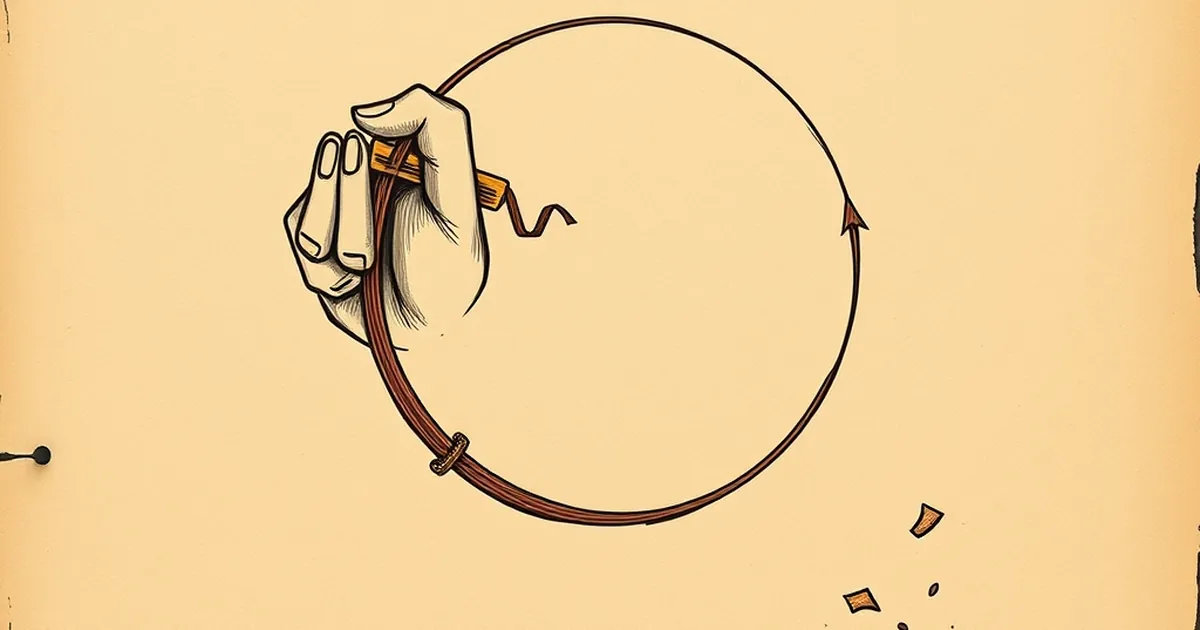
Somewhere around 11:58 PM, you watch the little progress ring on your dashboard refuse to close that last degree. You’ve done the work—the email is sent, the wireframe is approved, the invoice is drafted—but the system says you’re at 98%. So you click around, refresh, maybe complete a trivial task just to watch it hit 100%. And then you feel… nothing. A tiny chime. A confetti puff. A participation trophy you didn’t ask for.
Why does that final degree feel so hollow, when the first 90% felt like a rush? The answer isn’t in your design software; it’s in your brain’s reward circuitry.
The Variable-Ratio Hangover
Your progress ring is a classic variable-ratio reinforcement schedule. In behavioral psychology, this is the most addictive pattern of reward—think of the intermittent pings from social media or email. When you don’t know exactly when the payoff arrives, dopamine spikes harder on each hit.
But here’s the catch: a progress ring is not variable. It’s a fixed, linear march. You know with certainty that 100% comes after the last click. So your brain treats that final degree like a formality, not a reward. The unpredictability is gone, and with it, the thrill. You’re not chasing a jackpot; you’re just finishing a checklist. That’s why the last 2% feels less like a victory lap and more like a bureaucratic stamp.
Loss Aversion Is Your Silent Project Manager
Kahneman and Tversky’s loss aversion tells us that losing $10 hurts more than finding $10 pleases. Your progress ring exploits this—but in reverse. When you’re at 95%, the fear of not reaching 100% (a loss of completion) outweighs the joy of actually getting there. So you grind through the final tasks not because they’re valuable, but because an incomplete circle feels like a failure.
This is why the ring’s final degree feels like a participation trophy: you’ve already paid the emotional tax. The anxiety of “almost done” has drained the reward center. When the ring finally closes, you’re just relieved the pain stopped. Relief is not excitement.
The “Near-Miss” Effect in Your Own UI
In competitive play, a near-miss—like a spinner stopping one slot short—actually increases motivation to keep playing. Your progress ring does the opposite. At 98%, you’re in a near-miss state, but there’s no next round. The game is over. So your brain registers the near-miss as a loss, not a tease. You’ve been trained by slot machines to expect another lever pull; your dashboard gives you a dead end.
The Concrete Example: Duolingo’s Streak vs. Your CRM
Consider Duolingo. Their streak counter is a progress ring that does feel rewarding. Why? Because it’s not about completion—it’s about maintenance. The reward is the streak itself, not the final degree. Your CRM’s project completion ring, however, is binary: done or not done. There’s no ongoing variable reward.
A 2019 study in Nature Human Behaviour found that when participants were shown a progress bar that moved backward upon inactivity, their completion rates jumped by 15%. But the researchers also noted a drop in satisfaction post-completion. The bar gamified effort, but it didn’t gamify meaning. So you hit 100%, feel empty, and immediately look for the next ring to fill.
Designing for the Afterglow, Not the Finish Line
So what do you do with this? Stop designing your business dashboards to end. Instead, design for the post-100% moment.
- Add a “mastery” stage. After the ring closes, open a new ring labeled “maintain” or “review.” This keeps the variable-ratio alive because you don’t know when a review will uncover a new task.
- Reframe the final 2% as a decision point. Instead of a ring that fills, use a ring that splits—one arc for “done” and one for “improved.” The final degree becomes a choice, not a checkbox.
- Delay the reward. Show the 100% but hold the confetti for 24 hours. Let the relief settle, then send a delayed “here’s what this unlocked” message. That delay rebuilds the anticipation loop.
Your progress ring isn’t broken; it’s just using the wrong behavioral model. Stop treating completion as the prize. Treat it as the setup for the next variable, uncertain, and genuinely exciting move. That’s when the final degree will feel less like a trophy you didn’t earn—and more like a door you actually want to walk through.
— creative mess