Why Your Confetti Animation Rewards the Click, Not the Choice
Confetti celebrates clicks, not choices—here’s why your interface rewards action over intention and what it means for UX
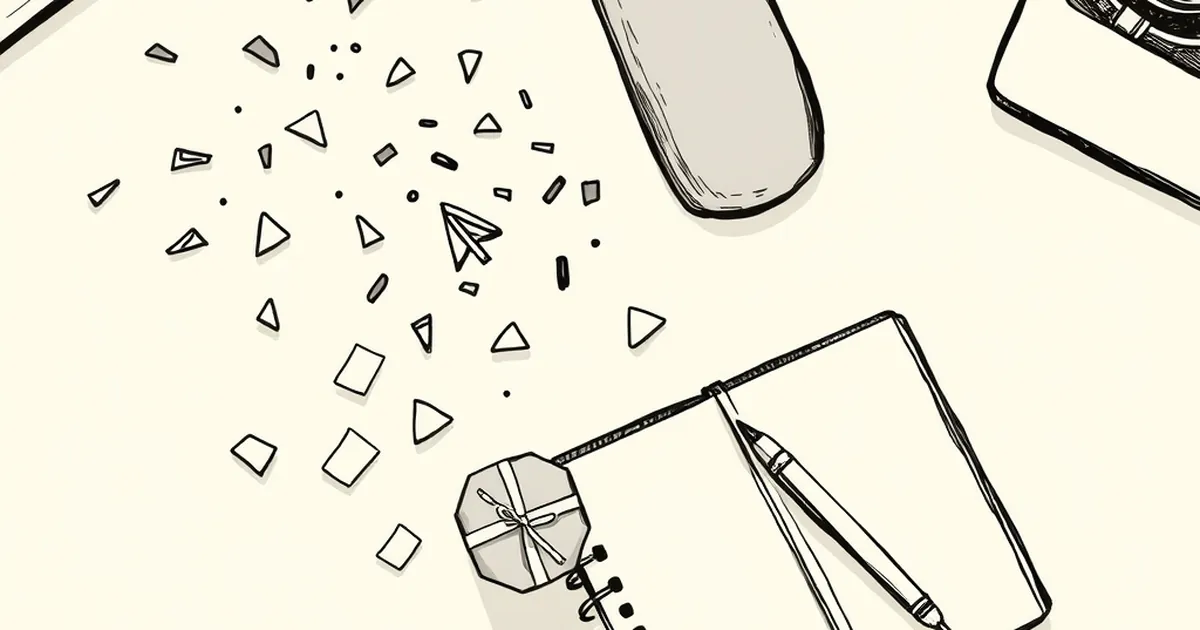
Ever noticed how a tiny burst of confetti on a checkout page makes you feel disproportionately accomplished? You clicked a button, and suddenly your brain registers a small victory. But here's the odd bit: that same confetti rarely appears when you painstakingly compare two subscription tiers or carefully craft a custom color palette. So why does the interface celebrate the mechanical act of clicking, rather than the cognitive act of choosing?
The Dopamine Gap Between Action and Intention
We tend to think of decisions as the climax of a user journey. But behaviorally, decisions are often exhausting, not exhilarating. That's because of choice overload—a concept popularized by psychologist Barry Schwartz. The more options you weigh, the more cognitive friction you generate, and the less rewarding the outcome feels. The click, by contrast, is a clean, binary event. It's the moment uncertainty collapses into a single, irreversible point of action.
The Variable-Ratio Surprise
Here's where it gets sneaky. Many design systems apply a variable-ratio reinforcement schedule—the same principle behind why checking your phone for a new notification is so addictive. If confetti appears every single time, it's predictable and boring. But if it appears randomly (say, 30% of clicks), your brain releases more dopamine. The reward becomes about the anticipation of the reward, not the choice that triggered it.
So your confetti animation isn't rewarding the user's thoughtful decision. It's rewarding the act of committing, regardless of whether that commitment was wise.
Loss Aversion in Your Micro-Interactions
Let's talk about the moment before the click. Kahneman and Tversky's loss aversion tells us that the pain of losing is roughly twice as powerful as the pleasure of gaining. When a user is hovering over a "Confirm Order" button, they're not thinking about what they'll gain—they're thinking about what they might lose (money, time, the wrong size).
A well-timed confetti burst doesn't address that fear. It just masks it with a flash of positive feedback. The choice itself—the actual weighing of pros and cons—remains uncelebrated and, frankly, unvalidated.
The Case of the "Skip" Button
Consider a study from a productivity app (the name escapes me, but the principle is solid): users who received a small "thumbs up" animation for skipping a distracting suggestion felt more in control than users who received confetti for completing a task. Why? Because the skip was a deliberate choice against a default. The confetti for task completion just felt like a Pavlovian pat on the head.
Designing for the Decision, Not the Click
So how do we flip the script? The goal isn't to remove delight—it's to attach it to the quality of the choice.
H3: Delay the Reward by a Half-Second
Instead of triggering confetti on mouseup, trigger it on a deliberate change event. If a user manually types a custom amount or selects a complex bundle, then animate. If they just smash the default button, keep it quiet.
H3: Celebrate the "Undo" Option
The boldest move? Confetti when a user clicks "Undo." That signals the system is rewarding the user's ability to reconsider—a metacognitive win. It says, "Your choice was safe, and you knew it."
The Forward-Looking Shift
The future of interface design isn't about making clicks feel great. It's about making the decision-making process feel lucid. Imagine a checkout page that gives you a subtle, non-visual haptic pulse when you've compared all options, and only then a gentle burst of color on the final confirmation. That’s not just a reward loop; it's a behavioral mirror.
Stop asking, "How do I make this button satisfying?" Start asking, "How do I make the thought satisfying?" Your confetti should be a receipt for cognitive effort, not a receipt for motor function. If you can do that, your users won't just click—they'll choose, and they'll remember why.
— creative mess